

































































Caring for the “Early Black” blueberry – location, growth & early harvest
The “Early Black” blueberry (Vaccinium macrophylla) is an especially early-ripening and hardy blueberry variety. It is characterized by its dark red to almost black fruit, an intense flavor, and a compact growth habit. This makes it ideal for the garden, raised beds, and larger planters.
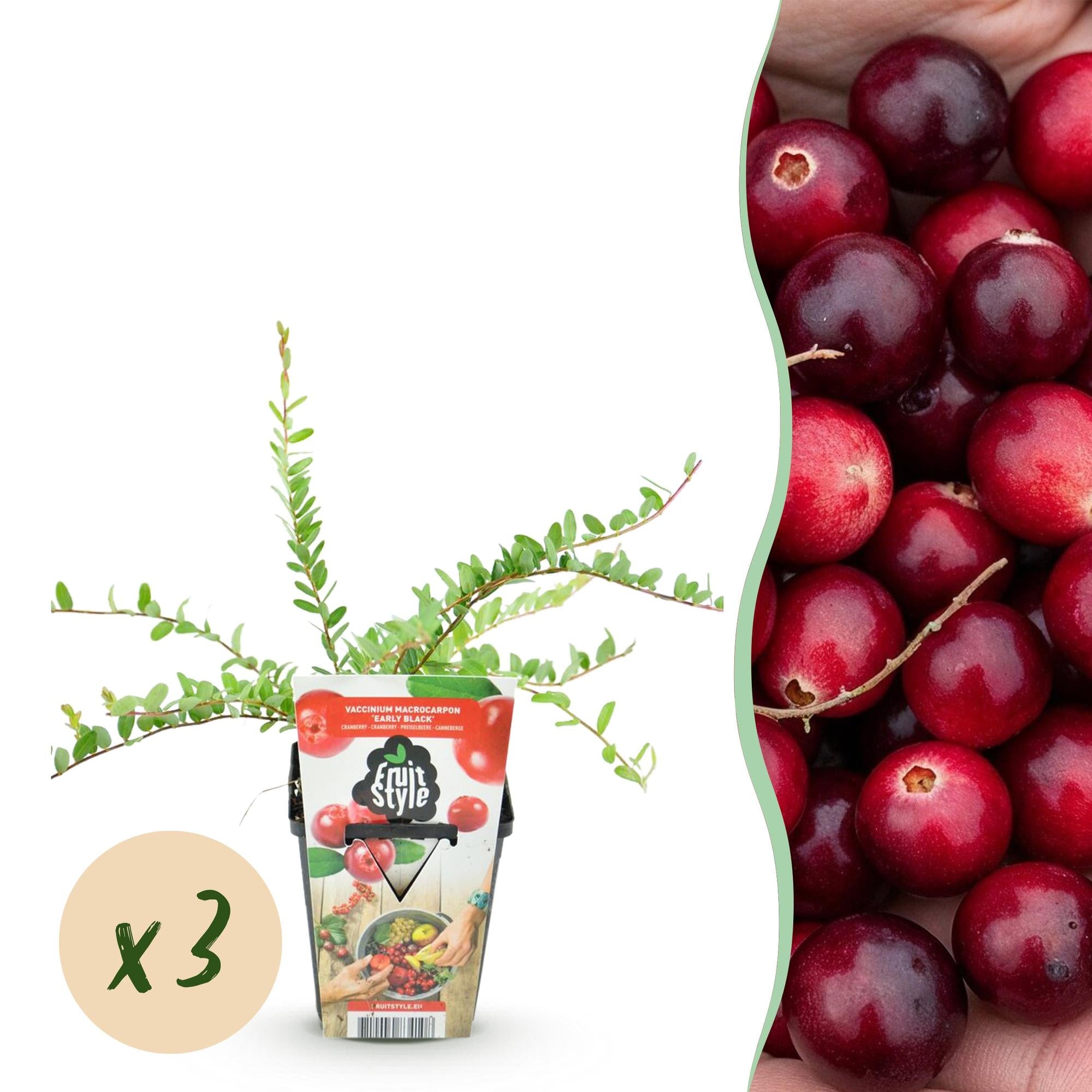
An optimal start is achieved with the 3-piece “Early Black” blueberry set , which provides vigorous young plants for a uniform stand.
Origin & characteristics of the “Early Black” blueberry
Where does Vaccinium macrophylla come from?
The “Early Black” variety belongs to the Vaccinium macrophylla species and is known for its very early fruit maturity. It was specifically bred for cool climates and impresses with its high frost tolerance.
Typical characteristics at a glance
- Very early harvest time
- Dark red to black berries
- Hardy and robust
- Well suited for smaller gardens
Appearance & growth of the “Early Black” blueberry
How does the “Early Black” variety grow?
The plant grows in a compact and bushy manner, reaching a height of about 80–120 cm. Young plants in a 9 cm pot – like this 3-plant set – develop quickly under good conditions.
Leaves, flowers & fruit
- Small, shiny green leaves
- White to pink flowers in the spring
- Dark, aromatic berries with firm flesh
Correct location for blueberries
Which location is ideal for “Early Black”?
The “Early Black” blueberry prefers a sunny to semi-shady location. Sufficient light promotes fruit formation and flavor.
- At least 4–6 hours of sun daily
- Sheltered location
- Acidic, humus-rich soil
Care & watering the “Early Black” blueberry
How often should you water blueberries?
Blueberries are sensitive to drought. The soil should be kept consistently moist without allowing waterlogging to occur.
- Water regularly, especially in summer
- Rainwater is preferred
- Mulch protects against drying out
Fertilization for healthy plants
Fertilizing with special blueberry or rhododendron fertilizer in the spring supports growth and fruit set.
Typical problems & solutions
Why do blueberries grow poorly?
- Soil pH is too high
- Lime-rich irrigation water
- Nutrient deficiency
Acidic soil (pH 4–5), rainwater, and appropriate fertilizer ensure healthy plants.
Propagation & long-term care
Propagation is done via cuttings. For permanently healthy plants, older shoots should be regularly thinned out.
Starting planting with several specimens – such as the “Early Black” 3-piece set – significantly improves pollination and yield.
Frequently asked questions about the “Early Black” blueberry
When does the harvest begin?
The harvest often starts in early summer and is among the earliest of all blueberry varieties.
Is the variety hardy?
Yes, “Early Black” is very hardy and well-suited for colder regions.
Is the blueberry suitable for containers?
With acidic substrate, a sufficiently large pot, and consistent care, growing in containers is easily possible.
Take action now:
With the right location, acidic soil, and consistent care, the “Early Black” blueberry develops into a reliable, high-yielding plant. The 3-plant set offers you the best conditions for an early and aromatic blueberry harvest.