































































‘Paul Scarlet Climber’ climbing rose – care, location, growth & FAQs
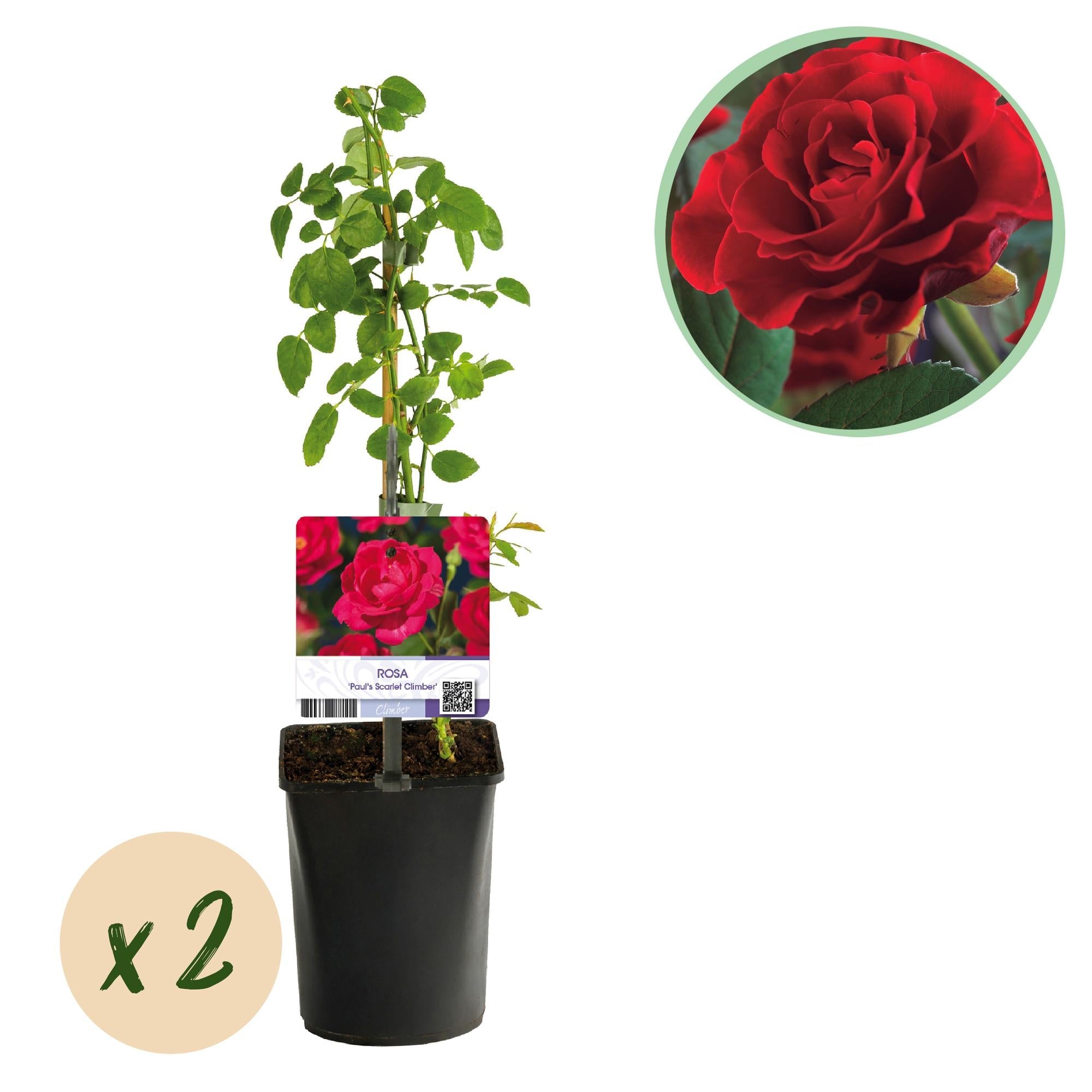
The ‘Paul Scarlet Climber’ climbing rose is one of the most popular red climbing roses for gardens, pergolas, and facades. Its vibrant scarlet blooms provide intense splashes of color, while its robust, low-maintenance nature makes it particularly attractive to both beginners and experienced gardening enthusiasts.
With two strong young plants in an 11 cm pot, the ‘Paul Scarlet Climber’ climbing rose provides the ideal foundation for a long-lasting, lush rose wall.
Origin & characteristics of the ‘Paul Scarlet Climber’ climbing rose
What makes this climbing rose so special?
‘Paul Scarlet Climber’ is a proven variety with strong vigor and high resistance. It is excellent for trellises, fences, or house walls and impresses with its reliable blooming performance.
- Vibrant red, semi-double blooms
- Robust, hardy variety
- Vigorous, climbing growth habit
- Low maintenance requirements
Appearance & growth of the Paul Scarlet Climber
How fast does the climbing rose grow?
The stems grow vigorously and are easy to attach to supports. Over the years, this creates a dense, flowering surface – ideal as a natural privacy screen or a decorative highlight.
With the Paul Scarlet Climber climbing rose you can create an intense color effect in your garden.
Right location for the ‘Paul Scarlet Climber’ climbing rose
Which location is ideal?
- Sunny to lightly partial shade
- Nutrient-rich, well-draining soil
- Airy spot to prevent fungal diseases
- Stable support for long stems
A sunny climbing rose location promotes intense bloom color and vigorous growth. Waterlogging must be avoided at all costs.
Caring for & watering the ‘Paul Scarlet Climber’ climbing rose
How often should you water the Paul Scarlet Climber?
Regular, thorough watering during dry periods is important, especially in the first year after planting. After that, the variety is considered relatively low-maintenance and resilient.
- Apply organic fertilizer in spring
- Remove faded blooms
- Pruning in early spring
A targeted climbing rose pruning ensures new, floriferous stems and an even growth habit.
Typical problems & solutions
Why does the climbing rose develop yellow leaves?
- Nutrient deficiency
- Soil that is too moist
- Lack of light
Yellow leaves on roses can usually be corrected by improving the soil structure and targeted nutrient supply. Good air circulation also strengthens plant health.
How does the Paul Scarlet Climber stay healthy in the long term?
Regular inspections, a suitable location, and balanced care are decisive factors. This keeps your red climbing rose vital and prolific in blooming.
Propagating the ‘Paul Scarlet Climber’ climbing rose
Is propagation possible?
Propagation via cuttings is possible, but they are not always true to type. For a reliable result, purchasing strong young plants like the ‘Paul Scarlet Climber’ climbing rose is recommended.
Prevention & long-term care
An annual pruning, loose soil, and regular nutrient supply form the basis for a permanently healthy plant. This is how a strong, lushly blooming rose wall develops.
Frequently asked questions about the ‘Paul Scarlet Climber’ climbing rose
Is the Paul Scarlet Climber hardy?
Yes, the variety is considered hardy. In very cold regions, light winter protection may be advisable in the first year.
Is the climbing rose suitable for pergolas?
Yes, due to its vigorous growth, it is ideal for pergolas, arches, and fences.
How intensely does the variety bloom?
The variety impresses with a rich main bloom in early summer and can bloom again with good care.
Take action now:
The ‘Paul Scarlet Climber’ climbing rose combines vibrant red blooms with robust, easy-care culture. With the right location, regular pruning, and balanced care, an impressive flowering wall will emerge.
With the Paul Scarlet Climber climbing rose you bring intense color and structure into your garden.