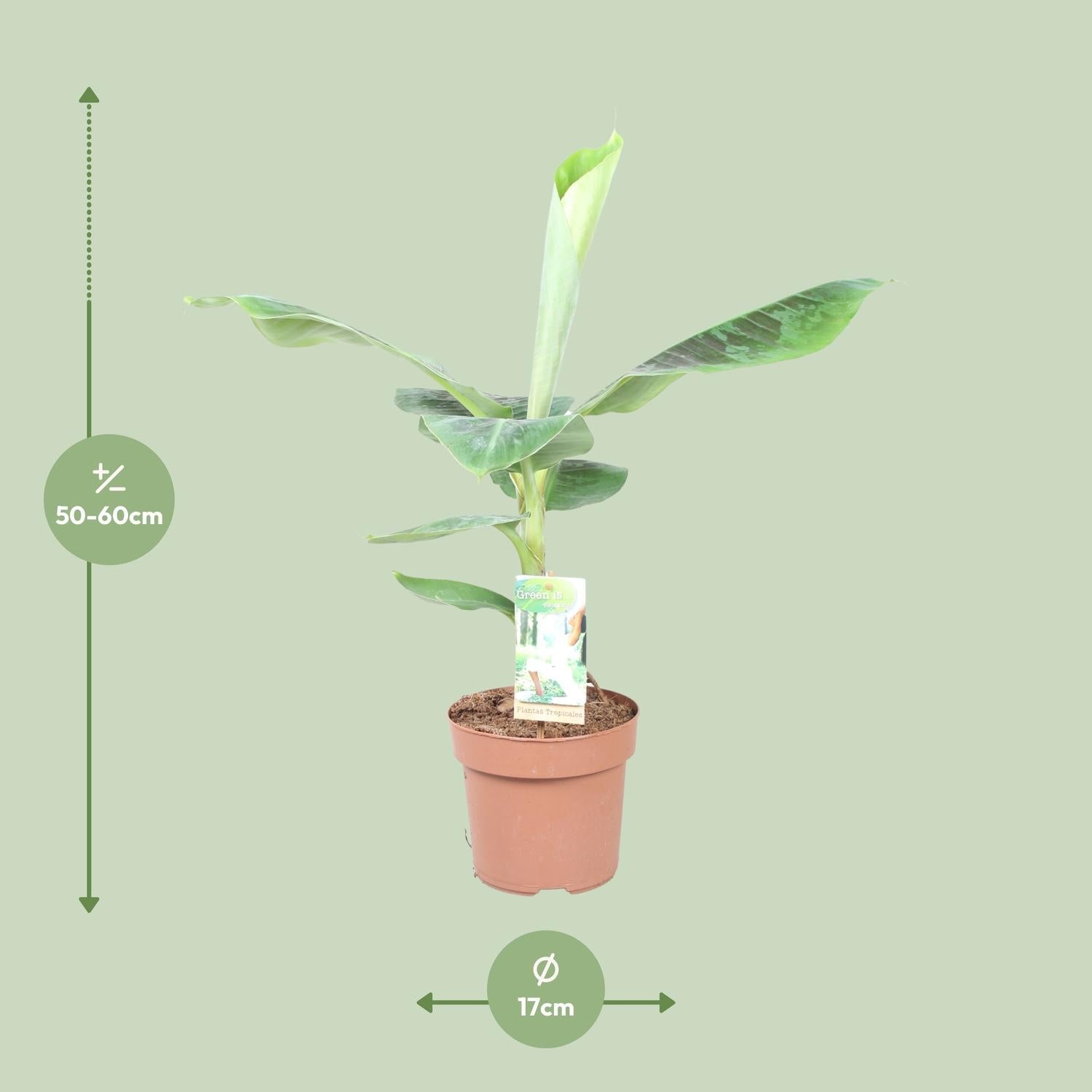





























































Bring that holiday feeling straight to your home! The Musa Dwarf Cavendish is one of the most popular banana plants for indoors. With its compact growth and impressive, large leaves, the dwarf banana transforms any room into a green oasis. It is not just a visual highlight; due to its high transpiration rate, it also actively increases the humidity in your home.
Origin & Features
The Musa Dwarf Cavendish belongs to the banana family (Musaceae). Contrary to what you might expect, it is not a tree but a giant herb. Its home is in the tropical regions of Southeast Asia. As a "dwarf" variety, it remains manageable and usually reaches a height of 60 to 130 cm indoors, making it an ideal houseplant.
Appearance & Growth
The leaves of the dwarf banana are broad and expansive, often displaying an attractive reddish variegation that fades as the plant ages. Under optimal conditions, it grows rapidly – you can almost watch the banana grow! Since it grows from what is known as a pseudostem, it is flexible but requires sufficient space for its large leaf surfaces.
The Ideal Location for a Dwarf Banana
Where does the Musa Dwarf Cavendish grow best?
Banana means sun! A sunny, warm, and bright spot is essential for the Musa Dwarf Cavendish. A south-facing window or a bright conservatory are ideal. In the summer, it can be moved to a sheltered spot on the balcony or terrace. Important: Accustom it slowly to direct UV light to avoid leaf burn.
Care & Watering: Quenching the Banana's Thirst
How much water does a Musa Dwarf Cavendish need?
When it comes to caring for your Musa Dwarf Cavendish, water is the key factor. Because of its large leaves, it transpires a lot of moisture. Keep the substrate consistently moist, but be sure to avoid waterlogging in the pot. It also requires nutrients weekly during the growth phase. We recommend high-quality potting soil that retains water well without compacting.
Common Problems & Solutions
Brown leaf edges and torn leaves
Brown edges usually indicate low humidity. Mist your dwarf banana regularly with lime-free water. By the way, it is completely natural for banana leaves to tear slightly at the edges; it is a protective mechanism against the wind—not a sign of disease.
Help with pest infestation
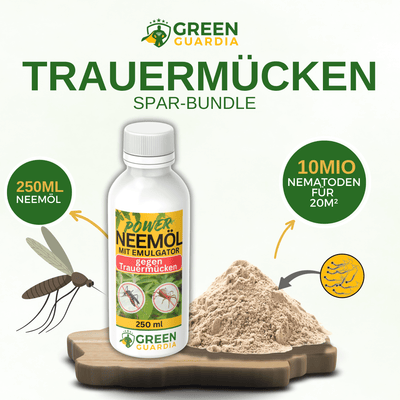
Especially in winter, dry heating air can lead to spider mites. Neem oil can be used as a natural plant protection to support care and generally strengthen plant health. It helps to keep leaf surfaces clean and the plant vital.
Propagation
A healthy Musa Dwarf Cavendish will eventually produce small side shoots, known as "pups." Once these have reached about a third of the size of the parent plant, you can carefully separate them and plant them in their own pots. It’s an easy way to propagate your own tropical paradise.
Common Questions About the Dwarf Banana
Does the Musa Dwarf Cavendish produce edible fruit?
Yes, under optimal conditions (plenty of light, warmth, and nutrients), the Musa Dwarf Cavendish can bloom and develop small, edible bananas as a houseplant after a few years.
Why are the leaves of my dwarf banana drooping?
This is often a sign of underwatering or extreme heat. Check the soil moisture. If the soil is dry, the plant urgently needs a thorough watering.
Is the banana plant toxic to cats or dogs?
Good news for pet owners: The Musa Dwarf Cavendish is considered completely non-toxic to pets. It is therefore a safe choice for a pet-friendly household.
Take Action Now: Bring the Jungle Home
The dwarf banana is the ideal plant for those who want to make a statement. With the right location and enough water, it will become the star of your plant collection. Are you ready for your own tropical project? Discover our healthy Musa Dwarf Cavendish now and start your journey toward your own banana harvest!
🍌 Tip: Bananas love "warm feet." Avoid cold tiled floors in winter and place the pot on a plant caddy or a cork mat instead.